
Practice with Himalayan View
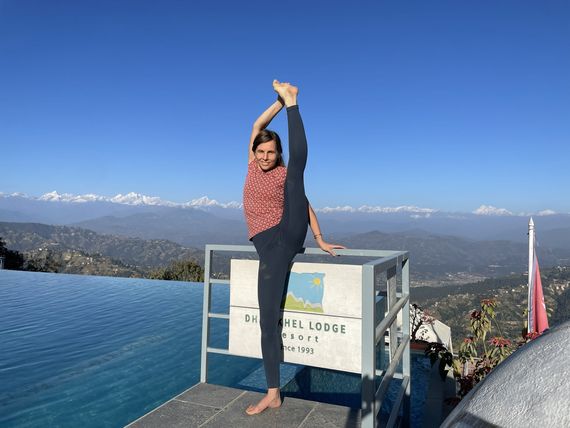
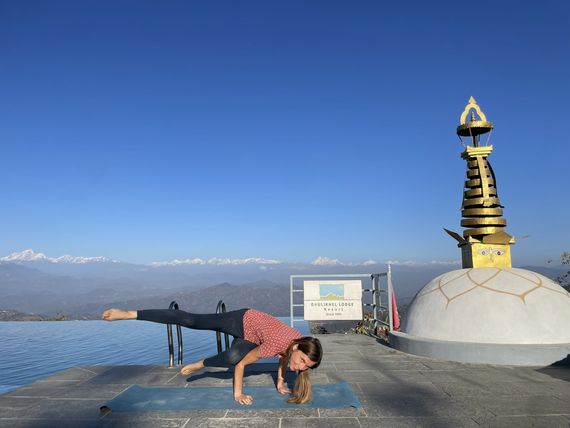
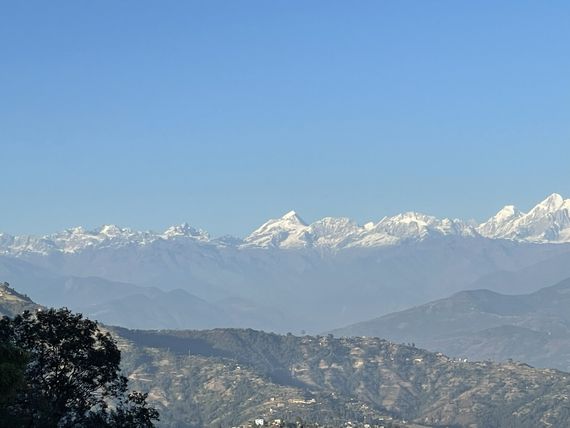
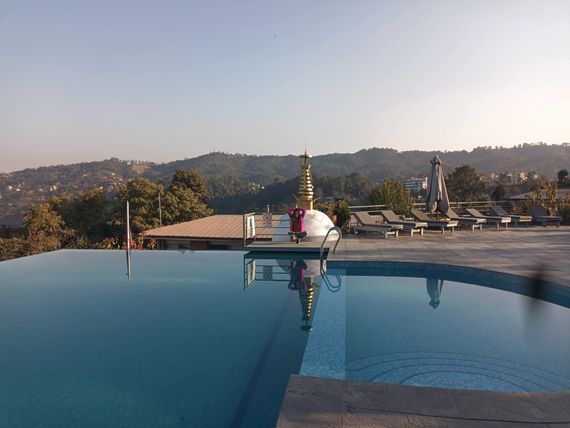
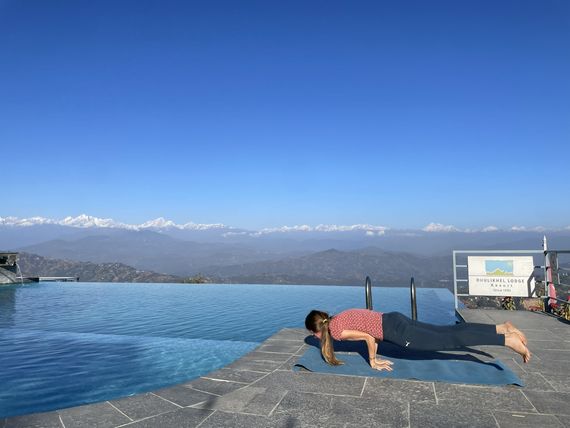
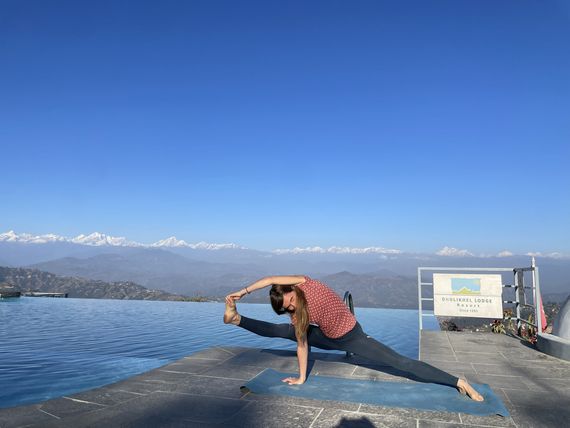
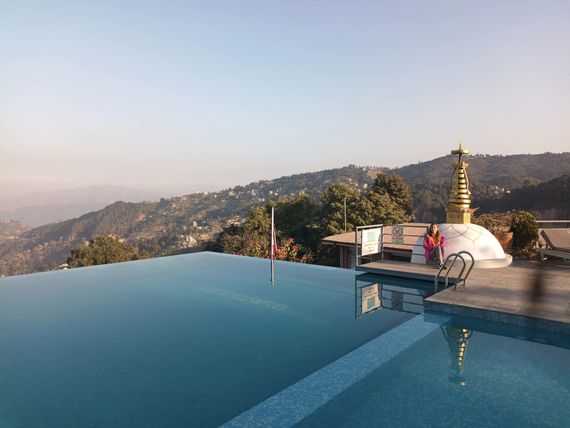
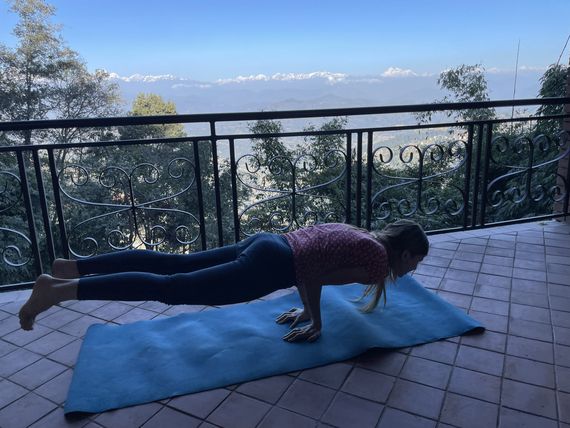
Our hotel was located in a very picturesque spot, about 1,550 metres above sea level, in Dhulikhel. December turned out to be surprisingly bright and sunny, so we saw the Himalayas, in all their glory, for the first time – these miraculous mountains have kept their pristine beauty and indescribable silence ever since they were uplifted from the bottom of the ancient Tethys Ocean in the Eocene Era (40–50 million years ago). From the 9-10 a.m. onwards, it begins to warm up, but the day’s sun and its heat roll down behind the mountains by 4-5 p.m. The swimming pool tempted me, but upon touching the chill waters, this desire dissolved into thin air, as did the kitchen smoke and the evening fire. I, with a preference for warm showers on winter evenings and very little body fat, felt like I would freeze to the bone. After practicing asanas, I enjoyed a cup of Himalayan coffee and veg momos (Nepalese dumplings). In Nepal, they’re made with paneer cheese or vegetables, offering dolce vita for vegetarians. Few words about the asanas: Mayurasana is amazing because it removes toxins, like snake poison, from the body. Imagine the nature of Krisha’s radiant bird – a peacock, who devoures God’s crawling creatures with gusto, watching over your garden. For it to work, perform this asana on time, and more than once! Vishwamitrasana (Sage Vishwamitra's Pose) requires balance, pretty hefty legs, stretching and, if possible, subsequent rotation of the torso (chest) upwards, towards the sky. Parsva Bakasana is a kind of “crane or even crow split” on the side (Side Crow Split Pose), and this variation has come naturally to me since the ancient times. I don't often see it in photos, but perhaps someone still likes to freeze in it, balancing on one leg. From a distance, near the small stupa, the Ardha Baddha Padma Padangusthasana engages Muladhara chakra and grounds you. This asana is one of my favourites because it grants an energy boost and inner balance. The next morning, I, with my devout student, ventured to the Kali Devi Temple of 1000 steps.
Yoga dictionary:
Momos (मोमोज – Momojah или मःम – Mahmah, contemporary variant) – dumplings
Mayura (मयूर) – Peacock
Parsva (पार्श्व) – Side, Flank or lateral
Baka (बक) – Crane
Ardha (अर्ध)) – Part, Half
Baddha (बद्ध) – bound, locked, restrained
Padma (पद्म) – Lotus flower (Nelumbo nucifera).
Pada (पद) – foot, step, foundation
Angustha (अङ्गुष्ठ) – Big toe, or Thumb.
Utthita (उत्थित) – Extended, or stretched
Hasta (हस्त) – Hand
Asana (आसन) – Seat, posture, or pose. Literally: Sitting down" or "being, a certain posture or sitting position. In the Yoga Sutras, sage Patanjali defines it as "sthira sukham asanam" – meaning a posture that is both steady and comfortable. Pose or posture
Dhulikhel (धुलिखेल) – situated 30 km southeast of Kathmandu, in Bagmati province